Universal Design for Learning
and TechnoKids Curriculum
Universal Design
for Learning
and TechnoKids Curriculum
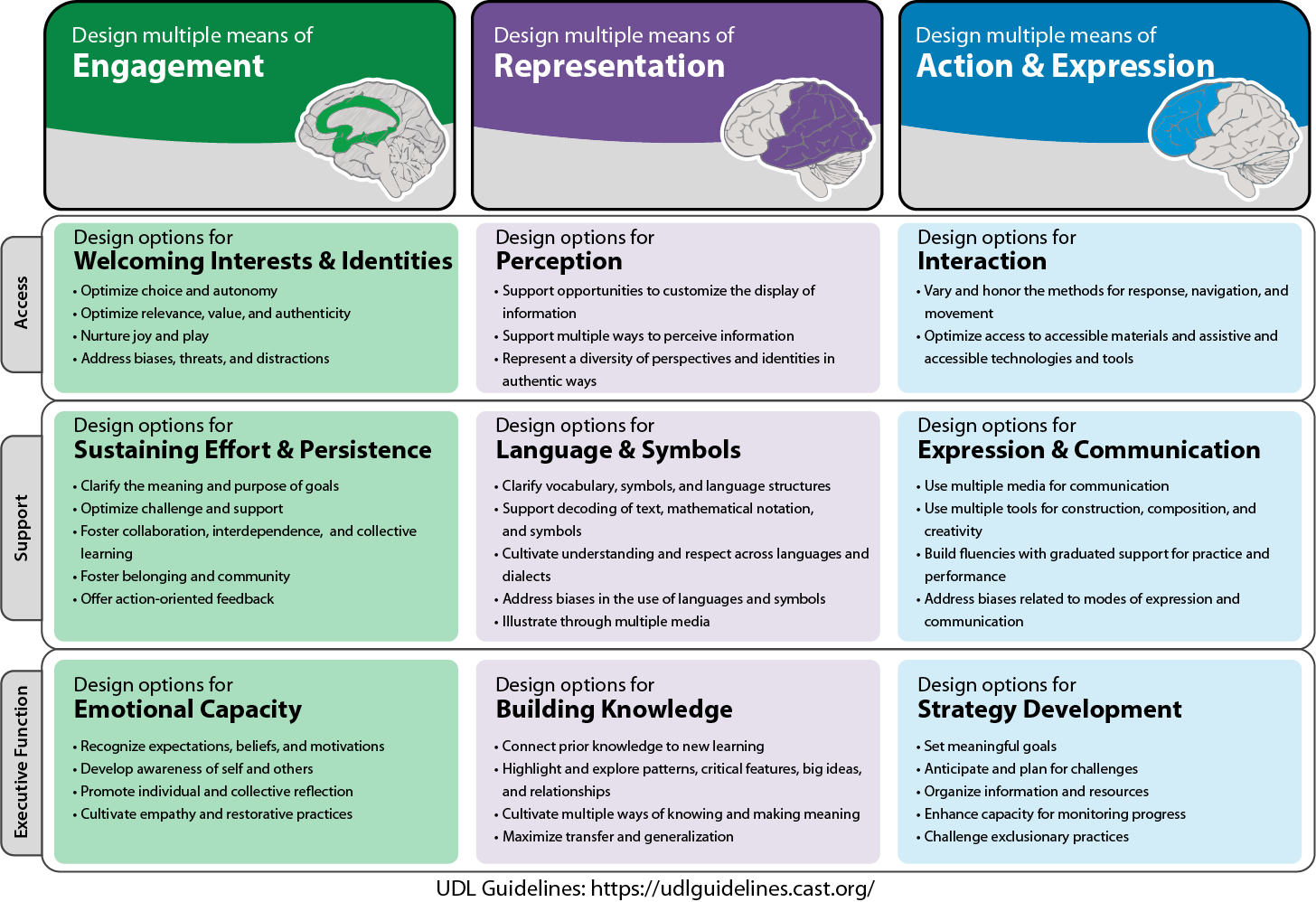
Universal Design for Learning, or UDL for short, is a set of guiding principles for designing curriculum that is flexible to accommodate all learners. TechnoKids applies the UDL framework to create our courses so that the instructions, activities, and materials meet every student’s needs.
TechnoKids Provides Learning
Opportunities to All Students
TechnoKids courses provide meaningful learning experiences for every student, regardless of their interests, background, or abilities. Our instructional materials are intentionally designed to minimize barriers, maximize success, and ensure equity:
- The courses are project-based. Everyone in the class learns the same technology skill, however each student applies their unique capabilities to produce their own original work.
- Assignments include step-by-step instructions, illustrations, screenshots, tips, and suggestions to support learners as they gain independence and competency.
- Tasks are open-ended, allowing students to select a topic that is personally meaningful.
- Resources such as templates, videos, and examples of completed work, scaffold learning empowering students to acquire new knowledge, skills, and problem-solving strategies.
- Learning is progressive. Students are introduced to a skill, practice their abilities, review their knowledge, and then extend their experience to new situations.
- Assessment tools support goal setting and self-regulation. These include tracking sheets, checklists, peer reviews, and reflections.
TechnoKids courses follow the UDL guidelines.
TechnoKids Provides Flexibility
and Choice to Teachers
TechnoKids curriculum not only accommodates different learners, but it is also adaptable to meet the diverse needs of teachers. Our courses emphasize flexibility and choice for educators:
- TechnoKids curriculum includes over 40 courses. Teachers can select a course that suits a topic, technology skill, product, or student interest.
- TechnoKids courses provide a variety of learning opportunities. Teachers can teach all the assignments or select the ones that best suit their students.
- Courses adapt to teachers' unique situations. They can be used as part of a dedicated digital literacy or coding class. Alternatively, the materials integrate seamlessly into subjects such as language arts or social studies.
- Courses include optional assignments such as skill reviews and extension activities. These allow teachers the ability to differentiate instruction by providing additional practice or enrichment tailored to their learners' needs.
- Resources such as parent letters, certificates, and samples are customizable. This empowers teachers to personalize the content to align with their learning community.
- Courses offer both formative and summative assessments. This includes quizzes, checklists, marking sheets, rating scales, rubrics, self-reflection, and peer reviews. These can be customized to add, delete, or edit criteria according to teachers' preferences.